A newborn needs surprisingly little: a safe place to sleep, enough clothes and diapers to get through a couple of days between washes, the supplies for how you plan to feed, and a rear-facing car seat if you'll travel by car. Almost everything else can wait until you know your baby and what actually helps.
The NHS newborn shopping list says you don't need everything straight away, and that not everything needs to be new except the crib mattress and the car seat. This guide turns that into a checklist, adds the safety standards to look for in Australia, the UK and the US, and lists the products safe-sleep bodies say to skip.
What do you really need for a newborn?
This is the core list, drawn from the NHS. Quantities are a starting point, not a rule.
| Area | Essentials |
|---|---|
| Sleep | Crib, bassinet or Moses basket; firm, flat mattress that fits; waterproof mattress cover; at least 4 fitted sheets; 2 sleep sacks or sheets and a cellular blanket |
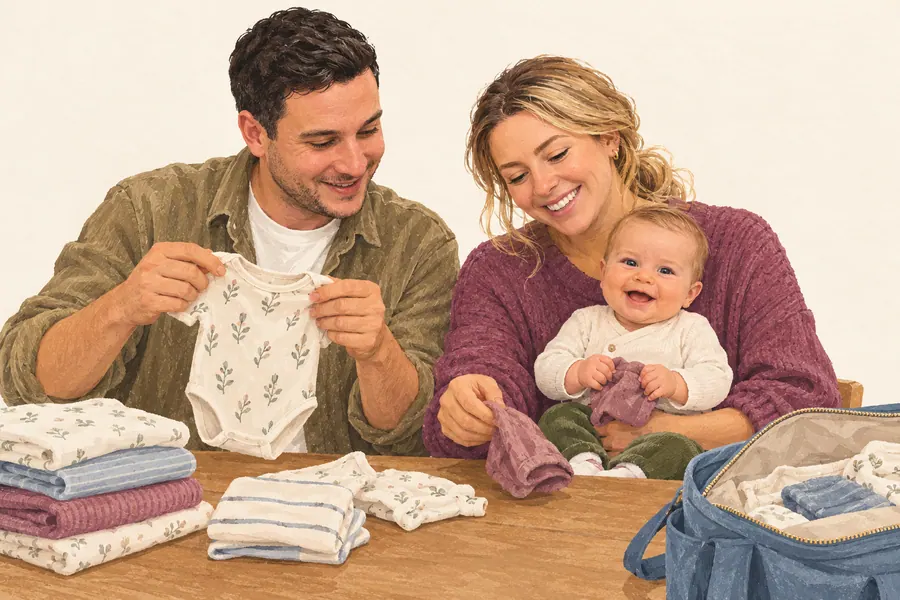
| Clothes | At least 6 sleepsuits; 4–6 vests; 2 cardigans; socks or booties; scratch mittens; a snowsuit if it's cold |
| Diapers | A few packs of newborn diapers; cotton wool or gentle, unscented, alcohol-free wipes; changing mat or towel; barrier cream |
| Bathing | Baby bath or washing-up bowl; towels |
| Feeding | Supplies for breastfeeding, formula or both (see below) |
| Travel | Rear-facing infant car seat; stroller that lies flat; diaper bag |
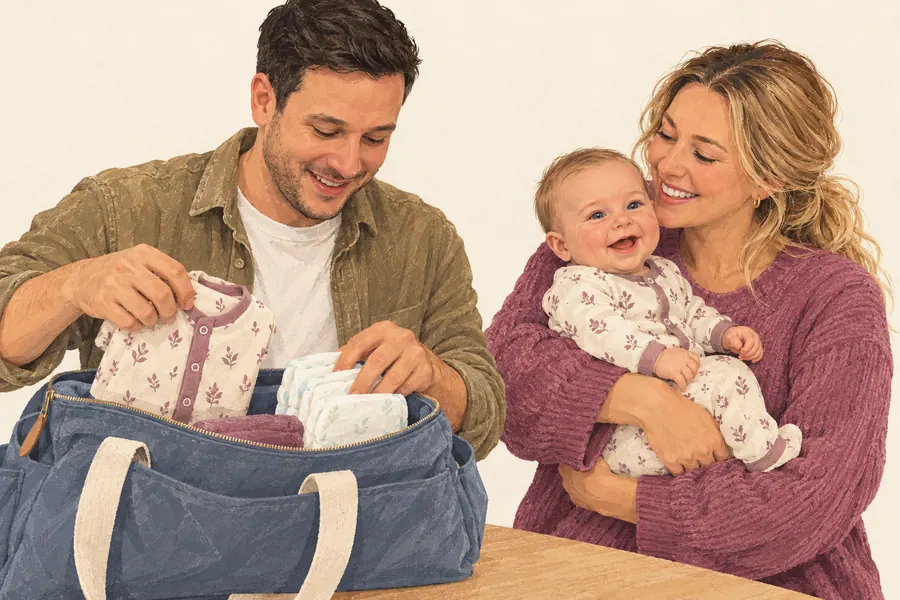
If two people are setting up, agree where each thing lives so whoever is on duty at 3am can find the diapers, a clean sleepsuit and the spare sheet without searching.
What do you need for safe sleep?
A place to sleep is the one thing you need from the first night. Red Nose in Australia says the safest place is your baby's own safe space, with a safe mattress and safe bedding, in your room for at least the first 6 months.
- A crib, bassinet or Moses basket. In Australia, use the ACCC household crib checklist to check the current safety markings, instructions and recalls, including when buying second-hand. Elsewhere, choose one that meets your national standard. A bassinet suits the early weeks; Australia's Red Nose says to move to a crib as soon as your baby shows signs of rolling, usually from about 4 months.
- A mattress that fits. The NHS says firm, flat and fitting snugly with no gaps. Australia's Red Nose's six recommendations add that it should be the right size for the crib.
- Bedding. Fitted sheets, and either sleep sacks with fitted neck and armholes and no hood, or light blankets. The NHS says not to use duvets or pillows. In the US, the AAP advises keeping blankets out of the crib and using a well-fitting sleep sack for warmth.
The sleep environment guide explains how to check the crib and mattress fit, and dressing your baby for sleep covers sleep sacks and tog.
How many clothes and diapers does a newborn need?
The NHS suggests at least 6 all-in-one sleepsuits and 4 to 6 vests or bodysuits with poppers under the diaper. Many families find it worth having a few in the next size up rather than lots of the smallest.
A few practical notes:
- Choose easy fastenings. Poppers or zips make night changes quicker.
- Hats are for outdoors. The NHS lists a sun hat for summer or a wool or cotton hat for cold weather. Its safer sleep advice says to take hats off as soon as you come indoors, even if it wakes your baby.
- Diapers. Start with a few packs of newborn size, disposable or cloth. The NHS suggests cotton wool or gentle, unscented, alcohol-free wipes for cleaning, and lists a barrier cream for diaper rash. See diaper rash.
What do you need for feeding?
That depends on your plan, and it's fine to start small. The NHS lists:
| Breastfeeding | Formula feeding |
|---|---|
| Nursing bras (measured at about 36–38 weeks) | Bottles with nipples and caps |
| Breast pads | Sterilizing equipment |
| Nipple cream | Bottle and nipple brushes |
| A breast pump, if you plan to express | Formula powder or ready-to-feed liquid |
| Muslin squares | Muslin squares |
If you're combining breast milk and formula, you'll want some of both columns. The preparing to breastfeed and preparing formula guides go into detail. A nursing pillow can help with positioning during feeds, but the AAP says never to let a baby sleep on one.
What do you need for car travel and getting out?
Car seat. If you'll travel by car, including home from hospital, you need a rear-facing infant car seat. In Australia, Pregnancy, Birth and Baby's car safety guide says babies up to 6 months must, by law, be in an approved rear-facing restraint that meets AS/NZS 1754, and recommends staying rear-facing for as long as your child fits. It suggests buying from a shop that only stocks restraints meeting Australian Standards, and getting help from an authorized fitting station if you're unsure about installation. See car seat safety.
Stroller. The NHS suggests a pushchair with a fully reclining seat so your baby can lie flat. Pregnancy, Birth and Baby's stroller guide says Australian strollers should meet the safety standard based on AS/NZS 2088:2000, with a 5-point harness, a wrist tether and red parking brakes, and that babies under 6 months should only go in a stroller that reclines to at least 130°. It also advises against covering a stroller with a dry cloth to block the sun, because it gets hotter underneath.
Sling (optional). If you use one, the NHS says to follow the TICKS rules (tight, in view at all times, close enough to kiss, keep chin off the chest, supported back) and not to feed your baby while they're in it.
Can I buy second-hand baby gear?
Much of it, yes. Check each item against the current standard and search your national product safety website for recalls.
| Item | Second-hand? |
|---|---|
| Clothes, muslins, bath | Fine |
| Crib | Yes, if it meets the standard and has all its parts |
| Crib mattress | Buy new where possible |
| Car seat | Buy new where possible |
| Stroller | Yes, if harness, brakes and tether work |
- Cribs: Pregnancy, Birth and Baby says to use a second-hand crib only if all parts are in good working order, it comes with full instructions, and old cribs are checked for lead paint. Australia's Red Nose's safe environment page says cribs under 10 years old should still meet safety standards.
- Mattresses: the Lullaby Trust suggests a new mattress for each baby where possible, because some research has linked second-hand mattresses from outside the family home with a higher risk of SIDS.
- Car seats: the NHS says to buy new. Pregnancy, Birth and Baby says a second-hand seat must be undamaged, less than 10 years old, carry a sticker showing it meets AS/NZS 1754, and never have been in a crash.
- Strollers: Pregnancy, Birth and Baby says to check for wear, working harness, brakes and tether, legible labels and available instructions.
What can you skip?
The AAP's list of registry items to avoid is a useful "don't buy" list for any country:
- inclined sleepers, which the US has banned
- crib bumpers and mesh crib liners
- sleep positioners and infant loungers
- extra-soft mattresses sold separately from the crib
- weighted sleep blankets
- bedding gift sets, loose blankets and pillows for the crib
- sitting baby walkers
- neck floats and baby floats for the bath or pool
The AAP says swings, rockers and bouncers are fine for awake play when used as directed, but not for sleep. On monitors, the AAP's safe sleep guide says not to use home heart and breathing monitors to reduce the risk of SIDS. See sleep products to avoid for why.
Plenty of other things are neither unsafe nor essential: a change table, a bouncer, a white noise machine, a baby monitor. It's easy to buy these later once you know whether they'd help.
What should you prepare for yourself?
Your own recovery deserves a list too. Many families find it helps to stock the freezer, line up who can help in the first weeks, save the numbers of your midwife, doctor or pediatrician and your pediatrician's after-hours nurse line, and sort out transport home. The postpartum recovery guide covers what to expect, and the hospital bag checklist covers what to pack.
A simple three-column list of "ready", "still needed" and "decide later" keeps the shopping manageable and stops a pile of "maybe" items becoming a pile of "must have" ones.