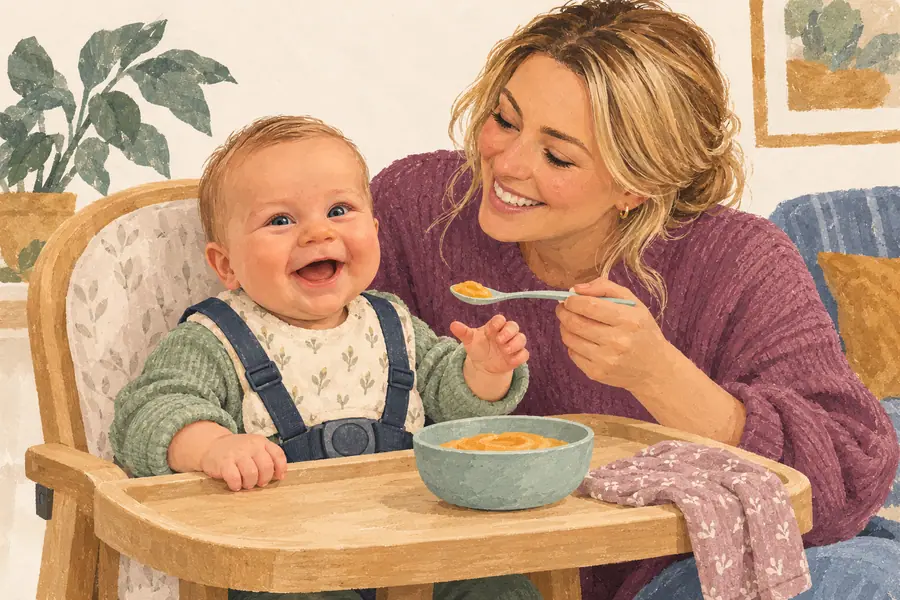
Iron matters from the very first spoonfuls. Australia's Pregnancy, Birth and Baby explains that a baby's iron stores build up in the womb and are low by around 6 months, so first foods should be iron-rich and can be offered in any order. Good options include puréed or minced meat, chicken and fish, well-cooked egg, lentils and beans, tofu and iron-fortified infant cereal.
The Royal Children's Hospital Melbourne iron fact sheet gives 11 mg a day as the Australian recommended intake for babies aged 7 to 12 months, falling to 9 mg a day from 1 to 3 years, and says it doesn't have to be reached every day. This guide covers which foods have the most iron, how to prepare them for a baby, how to help your baby absorb it, what gets in the way, and when iron drops are recommended. For readiness and the first meal, start with starting solids.
Why do babies need iron-rich foods from 6 months?
The CDC's iron page explains that iron supports brain development and the immune system, and helps red blood cells carry oxygen. Not getting enough can lead to anaemia. The Royal Children's Hospital adds that low iron can cause tiredness and poor appetite, and in some children problems with learning, behaviour and growth.
Breast milk and formula still matter. The CDC says standard iron-fortified formula can meet a baby's iron needs through the first 12 months. For breastfed babies, food becomes the main way to add iron from around 6 months, which is why Pregnancy, Birth and Baby says first foods should contain iron.
Which babies are more likely to run low?
The Royal Children's Hospital lists these groups as having a higher risk of low iron:
- babies who haven't started solids by around 6 months
- babies born prematurely, who may not have built up good iron stores
- children who eat a limited range of foods
- children on a vegetarian or vegan diet
- children who drink large amounts of cow's milk
- children with medical conditions that affect iron absorption or needs
Which foods are high in iron for babies?
The Royal Children's Hospital and the CDC divide iron into two kinds:
- Haem iron comes from animal foods and is absorbed more easily: beef, lamb, pork and kangaroo, chicken and turkey, and fish and shellfish such as salmon, sardines and tuna.
- Non-haem iron comes from plant foods and is absorbed less easily: iron-fortified infant cereal, legumes such as lentils, chickpeas and beans, tofu, green leafy vegetables such as spinach and broccoli, wholegrains, and nut and seed butters.
Eggs also contain iron; the CDC groups them with animal foods and the Royal Children's Hospital with plant sources. Either way, they're a useful first food.
The Royal Children's Hospital says liver isn't recommended for babies because it contains very high amounts of vitamin A.
How do I prepare iron-rich foods for a baby?
Texture should match your baby's stage. Pregnancy, Birth and Baby starts with smooth purées, and the NHS guide to feeding from around 6 months encourages mashed and soft finger foods as soon as your baby can manage them. Food textures covers the progression.
| Food | At around 6 months | Later in the first year |
|---|---|---|
| Beef, lamb, pork | Puréed, or finely minced and mixed into a familiar food | Soft mince in family meals; no tough or large chunks |
| Chicken, turkey | Puréed | Soft shredded pieces, no bones |
| Fish | Puréed or mashed, all bones removed | Flaked, boneless pieces |
| Egg | Cooked until the white and yolk are firm, then mashed | Strips of firm omelette or quartered boiled egg |
| Infant cereal | Iron-fortified, mixed with breast milk, formula or water | Thicker as your baby manages more texture |
| Lentils, beans, chickpeas | Cooked and puréed or mashed | Mashed or squashed, not whole |
| Tofu | Plain, cooked and mashed | Soft finger-sized pieces |
| Nut and seed butters | Smooth, thinly spread or stirred into food | Never whole nuts or seeds |
A few notes behind the table:
- Meat and fish. The CDC's choking hazards list includes tough or large chunks of meat, bones in meat or fish, whole beans, and chunks or spoonfuls of nut butter.
- Eggs. Pregnancy, Birth and Baby lists raw egg as unsuitable for babies. In the UK, the NHS says eggs with the British Lion stamp can be eaten raw or lightly cooked, but other eggs should not. Foods to avoid explains the difference.
- Cereal. The CDC's solids guide suggests iron-fortified oat, barley or multigrain cereals rather than only rice cereal, and the NHS first foods guide says babies don't need baby rice.
- Nuts and seeds. The Royal Children's Hospital says to avoid whole nuts and seeds for children under 3 and use nut butters or ground nuts instead; NHS guidance used in our choking guide says no whole nuts under 5.
Common allergy foods such as egg, peanut and fish are among the best iron sources, so introducing them early helps on both fronts. See introducing allergens.
How can I help my baby absorb more iron?
- Pair plant iron with vitamin C. The CDC says vitamin C-rich foods help babies absorb non-haem iron. Good partners include citrus fruit, broccoli, cabbage, berries, papaya, tomato and sweet potato (CDC), and capsicum, kiwi fruit and pineapple (Royal Children's Hospital). Mash or chop them to a safe texture.
- Combine meat with plant foods. Serving a little meat, chicken or fish with legumes or vegetables gives your baby both kinds of iron in one meal.
- Keep cow's milk in food only before 12 months. The Royal Children's Hospital says cow's milk contains very little iron, can fill a child up and can reduce iron absorption. After 12 months it suggests no more than 500 mL a day; see moving to cow's milk.
- Skip tea, coffee and cola around meals. The Royal Children's Hospital says these drinks reduce the iron absorbed from food.
Example day of iron-rich foods at about 8 months — adjust to your baby
| Meal | What's offered |
|---|---|
| Breakfast | Iron-fortified infant cereal with mashed berries |
| Lunch | Lentil and vegetable mash with soft broccoli |
| Dinner | Minced beef with soft sweet potato pieces |
This is a made-up example using foods from the sources above, not a menu your baby has to finish. Milk feeds continue around the meals.
Do babies need iron drops?
Advice differs by country and depends on how your baby is fed.
- US (AAP). The AAP's supplements guidance says healthy full-term breastfed babies don't need added iron for the first 4 months. From 4 months, it recommends that breastfed and partly breastfed babies have an iron supplement of 1 mg per kg of body weight a day until iron-containing foods, including iron-fortified cereals, are part of their diet. It says supplements may start in the first month for babies born prematurely or at a low birth weight.
- US (CDC). The CDC suggests asking your child's doctor or nurse whether your baby needs iron supplements before 6 months, and says preterm babies may need extra iron.
- Australia. The Royal Children's Hospital says most children can get enough iron from a varied diet, and that a doctor or dietitian may recommend a supplement if iron is low.
Whatever the guidance, don't start iron drops on your own. The Royal Children's Hospital warns that too much iron can be harmful to children, and says prescribed iron should be given exactly as advised. Your doctor will choose the product and amount. Vitamin D drops are a separate question; see vitamin D for babies.
When should I get help?
Call your local emergency number (000 in Australia, 999 in the UK, 911 in the US) if your baby is choking and can't cough, cry or breathe, or has sudden swelling of the lips, tongue or throat, or trouble swallowing or breathing, after a food (the NHS food allergy guide lists sudden swelling of the lips or tongue as a reason to call an ambulance). Choking vs gagging and introducing allergens set out the first-aid steps.
Talk to your GP or child-health nurse if:
- your baby was premature or had a low birth weight and you haven't discussed iron
- your baby is still refusing most iron-rich foods after several weeks of trying
- your family eats a vegetarian or vegan diet and you'd like help planning your baby's meals
- your baby seems unusually tired or has a poor appetite, which the Royal Children's Hospital lists among the effects of low iron
In the US, the CDC says your child's doctor or nurse will likely test for anaemia at around 12 months, which is a good time to raise any questions about iron.
What's worth noting about iron-rich foods?
A simple list of which iron-rich foods your baby has tried, and how they were prepared, makes it easy to rotate meat, fish, egg, legumes and fortified cereal through the week. If your baby keeps refusing a particular texture, noting it helps you try a different preparation rather than dropping the food altogether.