Start offering a cup from around 6 months, when your baby starts solids, and aim to move off bottles from around 12 months. An open cup or a free-flow cup without a valve is best for learning to sip. When it's time to drop bottles, go one at a time, offer milk in a cup at meals instead, and leave the bedtime bottle until last. The main reasons are teeth and appetite: sipping from a bottle for long periods, especially in bed, raises the risk of tooth decay.
Exact ages differ a little between countries, and that's fine: these are guides, not deadlines. This page sets out what Australian, UK and US health services suggest, a step-by-step plan, what to put in the cup, and when to get help.
When should babies start using a cup?
All three countries suggest around 6 months:
| Source | Start a cup | Move off bottles |
|---|---|---|
| Australia (Better Health Channel) | From about 6 months | Only a cup by around 12 months |
| UK (NHS) | From around 6 months | Bottles discouraged from 1 year |
| US (AAP) | Around 6 months, with solids | Between 12 and 18 months; open cup by about 2 years |
The sources are the NHS guide to drinks and cups, Australia's Better Health Channel guide to tooth decay in young children, and the AAP's guide to moving from bottle to cup.
Early cup practice is mostly about learning. Kids Health (Nemours) notes that cup drinking is messy at first but that by 12 months most babies can hold and drink from a cup.
If your baby is breastfed and hasn't had bottles, there's no need to introduce one now. La Leche League says babies older than 6 months may not need a bottle at all, so going straight to a cup is an option.
Which cup is best for a baby?
- Open cup: a small, ordinary cup you hold to begin with. The NHS says to move to an open cup as soon as your child is ready.
- Free-flow cup: a lidded cup without a valve, so liquid flows when tipped. The NHS says open and free-flow cups teach sipping and are better for teeth.
- Spill-proof cup with a valve: convenient, but your baby sucks rather than sips. Kids Health says dentists recommend a hard spout or a straw over a soft spout if you use one.
- Straw cup: Kids Health lists straws as a dentist-preferred option.
Whatever you choose, sit your baby upright and stay with them while they drink.
What should go in the cup?
| Age | Main drinks | In the cup |
|---|---|---|
| 6 to 12 months | Breast milk or formula | Sips of water with meals; some expressed milk or formula |
| From 12 months | Breast milk if you're continuing, food and milk | Water and milk |
The NHS says breast milk or first infant formula remain the main drinks until 12 months, with sips of water from around 6 months. Cow's milk can be used in food from around 6 months but not as a main drink before 12 months. From 1 year, it says formula isn't needed and pasteurised cow's milk can become the main milk drink. For how much milk a toddler needs, see moving to cow's milk; for water, see water for babies.
Bottles and cups should hold only breast milk, formula or water. The NHS says not to add sugar, cereal or baby rice, and juice isn't needed under 12 months.
How do you wean your baby off the bottle, step by step?
Most children manage best with a gradual change. This plan combines Kids Health's step-by-step approach with the AAP's tips:
- Practise first. Offer a cup at meals from around 6 months so it's familiar before bottles go.
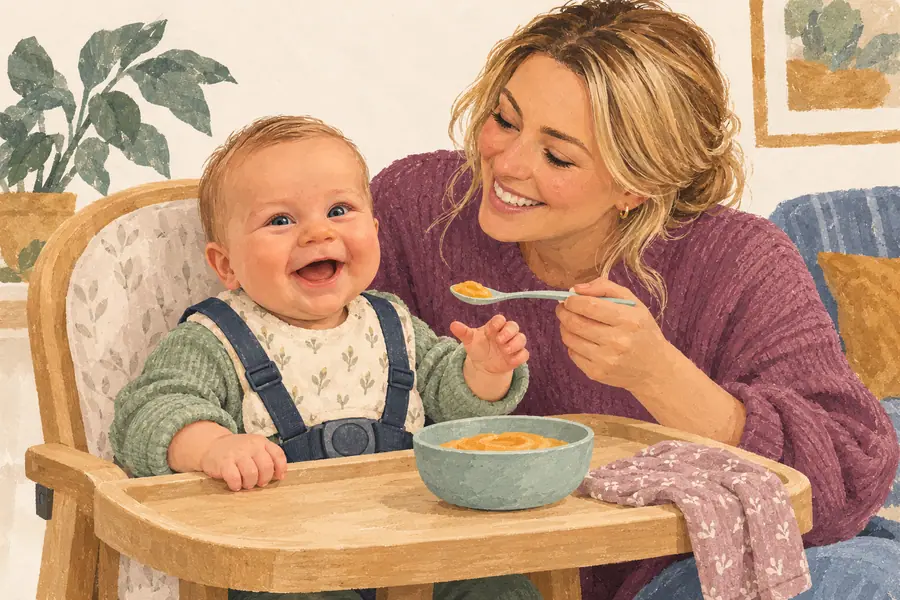
- Drop one bottle. Kids Health suggests starting with the morning bottle: bring your child to the table and offer milk in a cup once the meal begins.
- Wait about a week, keeping the other bottles, then drop the next one, again offering milk in a cup in the high chair.
- Keep bottles to mealtimes. The AAP suggests telling your child they can have a bottle at meals, removing it at other times, and offering plain water in any bottles between meals.
- Leave the bedtime bottle until last. Kids Health suggests offering a cup of milk with dinner, then bath, story and teeth brushing. Some families ease the change by gradually making the bedtime bottle more watery until it's just water, as Kids Health describes.
- Put bottles out of sight once they're finished with.
- Meet the real need. If your child asks for a bottle, Kids Health suggests working out what they need: food or a drink, a cuddle, or something to do.
Praise cup drinking, and expect a few wobbly days. If you're also weaning from the breast, change one thing at a time; see weaning from the breast.
Why does stopping bottles matter for teeth?
Australia's Better Health Channel explains that if a baby goes to bed with a bottle of milk, formula or a sweet drink, milk can pool in the mouth. The lactose sugar feeds the bacteria that cause decay, and saliva flow is low during sleep, so it doesn't protect the teeth. The CDC's bottle-feeding guide also warns against putting babies to bed with a bottle.
The AAP lists other reasons to complete the switch, including cavities, filling up on milk instead of solid food, and tooth alignment problems. The NHS adds that comfort sucking on sweetened drinks from a bottle is especially harmful, because liquid flows slowly through a teat and sugar stays on the teeth longer.
Australia's Better Health Channel says the first sign of early decay is a dull white band on the tooth surface near the gum line, and suggests dental check-ups from when the first tooth appears or by 1 year.
What if your toddler won't give up the bottle?
- Go slower, dropping one bottle a fortnight instead of one a week.
- Change the routine around the bottle, for example a story in a different chair, or milk at the table rather than on the couch.
- Offer the cup without pressure, with the same milk your child usually has. The AAP suggests starting with the milk or formula they already drink.
- Keep sleep settling separate. The AAP warns that giving a bottle at bedtime can turn sleep into a struggle; use cuddles, a story or music instead. See toddler sleep.
Talk with your GP or child-health nurse if your toddler drinks a lot of milk but eats very little food, or if you're finding the change hard.
When should you get help?
These signs come from the NHS guide to spotting a seriously ill baby or toddler.
Get urgent advice the same day (your GP or a health advice line (Pregnancy, Birth and Baby on 1800 882 436 in Australia, NHS 111 in the UK, your pediatrician's after-hours line in the US)) if your child is refusing all drinks and seems unwell, or has far fewer wet nappies than usual or dark yellow wee. The NHS dehydration page lists these as reasons for an urgent appointment. Call your local emergency number (000 in Australia, 999 in the UK, 911 in the US) instead for a sunken soft spot, sunken eyes or a child who is much sleepier than usual: the RCH dehydration fact sheet says severe dehydration needs hospital care fast, although the NHS page gives a sunken soft spot and drowsiness an urgent GP appointment.
Mention it at the next check if your child is still mostly bottle-fed well past 18 months, drinks so much milk that they eat little food, or you notice white or brown marks on their teeth (book a dental check too).
What's worth noting during the switch?
Jot down which bottles you've dropped and when, roughly how much milk your child drinks from a cup each day, and how meals are going. A week or two of notes shows whether milk is crowding out food and makes it easy to plan the next step.