Begin with a small invitation
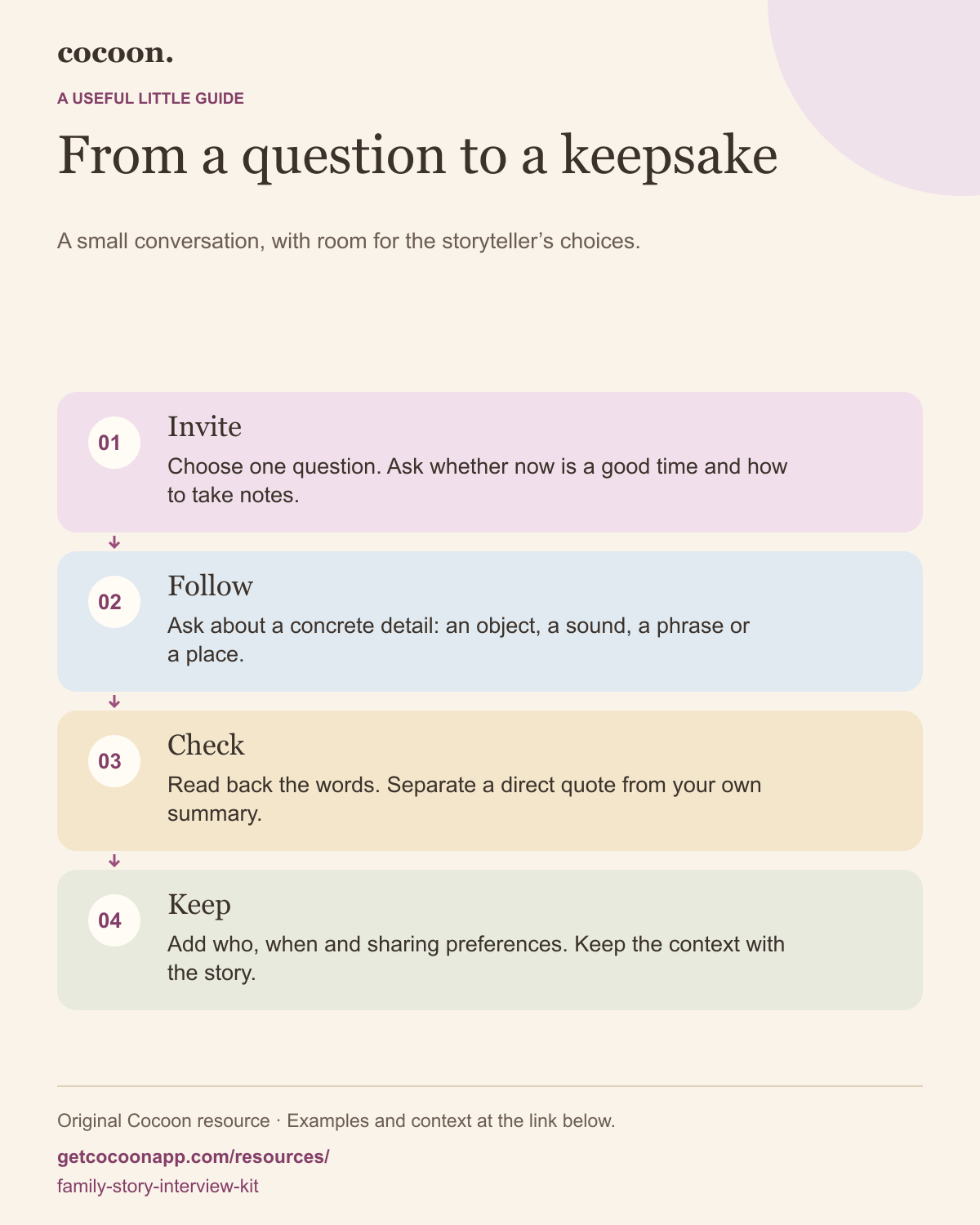
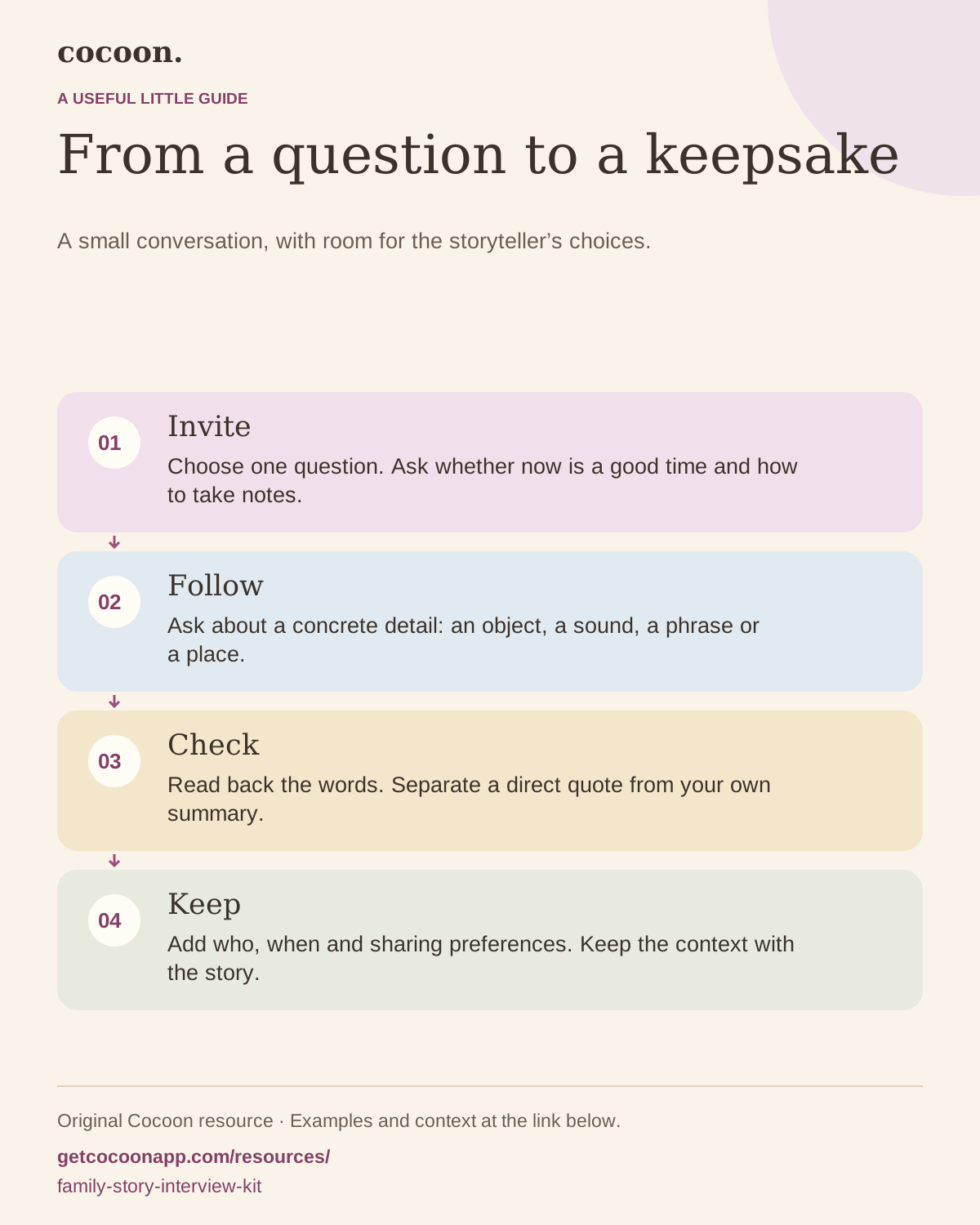
Try “Could I ask you about one ordinary thing you remember, for our family journal?” A short conversation is easier to agree to than an invitation to tell an entire life story. Offer a choice of speaking, writing or skipping the question. Ask separately before recording audio or video.
Explain who you imagine reading or hearing the result. Keeping a story for yourself, sharing it in a family group and publishing it are different choices. A person can be happy to tell you something without wanting a recording circulated. These are practical conversation habits, not a legal consent form.
Follow a detail instead of finishing the list
Choose one of the 18 questions below. When an answer contains something distinctive, stay there: “What did the kitchen sound like?” or “Do you remember the words of that saying?” A particular object or action can bring a scene into focus without asking someone to produce a polished story.
Leave space for “I do not remember.” Avoid supplying an answer just because you have heard a different version. If two relatives remember an occasion differently, keep each account attributed. The purpose is to preserve their perspective, not decide who has the official family memory. Dates can be approximate when labelled that way.
Turn a conversation into an honest entry
Use a title someone could recognise later, such as “Auntie’s blue bowl.” Add the storyteller’s preferred name, the conversation date and the period they are remembering. Keep those two dates separate. A memory told in October may describe something that happened decades earlier.
Use quotation marks only for words you recorded accurately and have permission to keep. Otherwise write “In my notes, she described…” or “My summary of our conversation.” Read a short draft back to the storyteller if they want that opportunity. Ask about names or home-language words rather than silently replacing them with your own spelling.
Keep a private story private
A family memory can include other people’s experiences, names and locations. Ask which details should stay in the private version and which can appear in a copy for relatives. For photographs involving children, eSafety notes that even privately shared material can be copied and passed on Source 1.
Keep the sharing preference beside the entry so it does not disappear when the file moves. If someone asks you to remove a shared copy, act on the copies you control and contact the people who received it. You cannot promise that every copy elsewhere has vanished. Use the photo-sharing conversation plan for a wider family agreement and the backup checklist to preserve the words alongside any media.