Share the last feed, last wake-up, last nappy or diaper change, what is happening now and anything uncertain. Use actual times and one shared record so the next caregiver does not have to reconstruct the day.
A practical next step
Three handovers that need a different answer
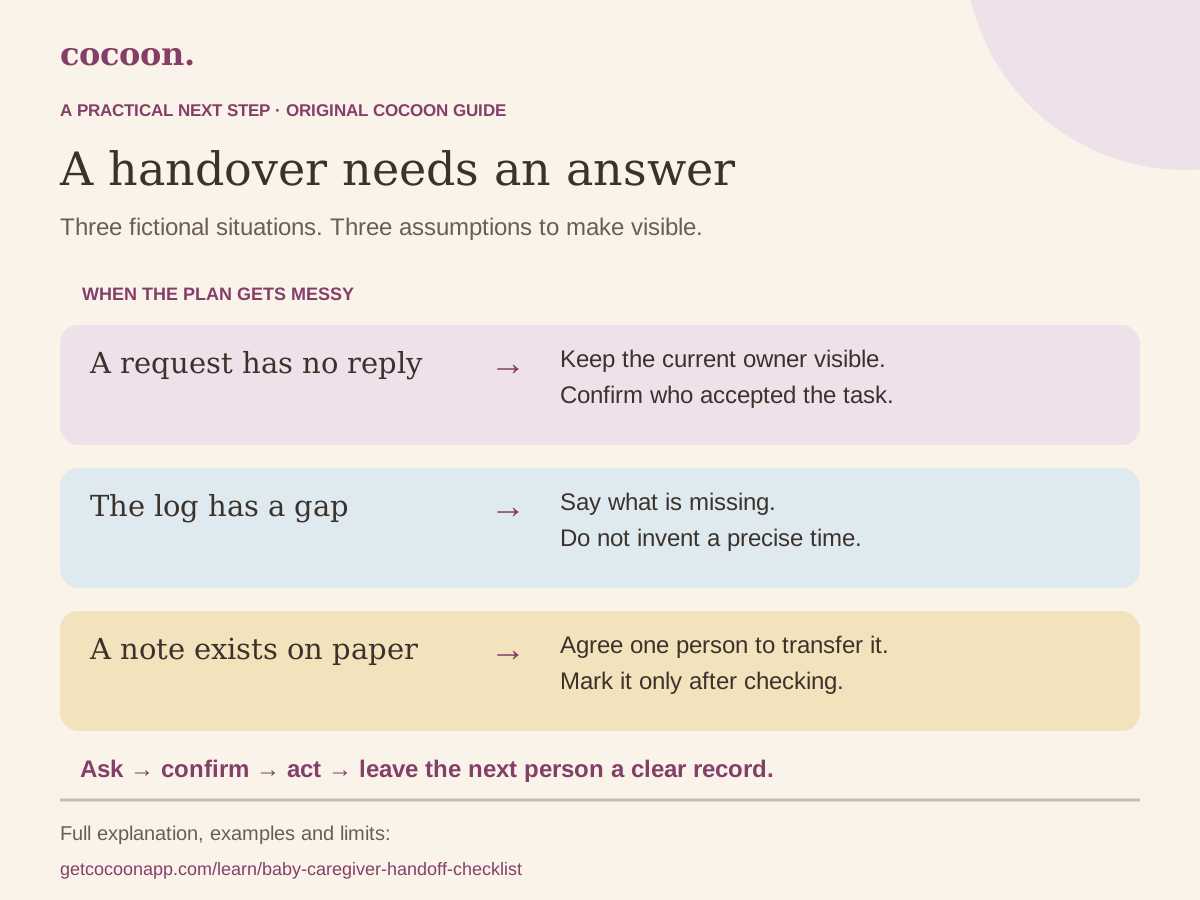
The awkward handover is rarely the one where everything happened exactly as planned. Work through these three fictional situations to distinguish a request from confirmation, a missing entry from “nothing happened”, and a copied note from a second event.
A delayed pickup needs confirmation, a missing entry needs uncertainty, and a paper record needs one agreed person to transfer it.
The steps and worked examples are explained in full below.
Fictional scenario 1
The pickup person is delayed
At 15:10, Sam learns a meeting will run late. Alex has not replied to “Can you collect today?”
The assumption to catch
A sent request is treated as an accepted handover.
A clearer message
“I am still responsible for arranging pickup. Can you confirm you can collect today? I will tell the service once we have agreed, using its required process.”
What closes the loop?
Alex explicitly accepts, the service’s collection requirements are checked, and both adults know who is collecting. If there is no reply, the existing responsibility has not silently transferred.
A shared log does not authorise someone to collect a child. Use the service’s own collection and contact arrangements.
Fictional scenario 2
The afternoon has a gap in the log
Jo arrives at 17:00. The last visible feed entry is from midday, but Lee says another feed happened and cannot remember the exact time.
The assumption to catch
The latest visible entry is assumed to be the latest event.
A clearer message
“There was another feed this afternoon; the time is unknown. Lee can describe what they remember. The log is incomplete, so do not use midday as proof of the last feed.”
What closes the loop?
Jo knows which facts are observed and which are missing. Any estimate is labelled; a precise time is not invented to tidy the chart.
Care decisions follow the child’s cues and individual care instructions. This scenario only explains the record.
Fictional scenario 3
Two adults have the same paper note
A grandparent hands over a written sleep record. Both parents plan to copy it into the shared journal later.
The assumption to catch
Two copies of one observation become two separate events.
A clearer message
“I will transfer this sheet after checking the child and date. I will mark it transferred, and keep the original. Please do not enter it again.”
What closes the loop?
One agreed person checks existing entries, transfers the relevant record and marks the paper. If two entries already exist, compare them before correcting anything.
An automatic duplicate check is not a substitute for knowing whether two entries describe the same event.
Keep responsibility visible until someone accepts
A message can be delivered while the recipient is in a meeting, driving or asleep. Write who is responsible now and what would confirm the change. Agree beforehand how to make contact if the usual channel is not answered. A read receipt is not the same as an adult accepting the task. For a childcare pickup, follow the service’s own authorisation process.
Explain what the next adult should not infer
“There is a gap after midday” is useful information. “Nothing happened after midday” is a different claim. Ask the previous caregiver what they actually remember, label estimates and keep unknown times unknown. The aim is to carry uncertainty across the handover, not hide it behind a tidy sequence of entries.
Finish the handover with one small check
The receiving adult can say back who is doing the next task and what remains unresolved. This is an ordinary communication suggestion, not a validated handover protocol. When information belongs in an individual care plan or a service’s required record, use that system; this exercise does not replace it.
Original Cocoon planning ideas and fictional examples. These have not been validated in a parent usability study.
Five lines to hand over the day
Use this as a flexible memory aid, alongside your family’s usual care instructions:
Feed: when it started and finished; type; last breast side or bottle amount actually taken.
Sleep: when baby last woke, or when the current sleep began.
Nappy / diaper: the last change and what was recorded.
Right now: asleep, feeding, awake, or an unfinished timer that needs checking.
Anything else: an approximate time, an unlogged outing, supplies or a question to pass on.
Use clock times with AM/PM or a 24-hour clock. “An hour ago” becomes ambiguous if someone reads the message much later. Add the date for overnight entries.
An example you can adapt
Fictional handover at 14:00:
Last feed: breast, 12:35–12:55, finished on the right. Last sleep: about 13:05–13:40. Last nappy: wet, changed at 13:45. Awake now. Sleep start is an estimate; no other records are missing this afternoon.
This is a description of what happened, not a schedule for the next caregiver to follow. You can shorten it to whatever information matters for your family.
Avoid including sensitive information in a public group or an openly shared document. Choose a private place your caregivers can access, and review who still needs access when arrangements change.
Agree who logs the next event
One person starting a feed while another logs it afterward can create two entries for the same event. Agree that the caregiver doing the task records it, or clearly hand that job to someone else.
Before ending a timer, check that it belongs to the current feed or sleep. When a phone has been offline, allow the shared record to sync and check the last few entries. If someone used paper, decide who will transfer it and mark it as transferred to avoid copying it twice.
Pass on observations, not guessed deadlines
“Woke at 13:40” is more dependable than “must nap at 15:00”. The next caregiver still needs to notice hunger, fullness and tired signs. Sources: CDC and Raising Children Network.
If your baby has a clinician’s care plan, share the actual current instructions and who to contact with questions. Do not rely on a shortened app note to reconstruct medicine doses or a feeding plan.
Cocoon’s family-sharing features keep care records together. The paper log is also useful when a caregiver would rather write things down.
Sources and scope
Sources support the specific health, timekeeping or product context cited above; each has its own check date. The recording examples and templates are Cocoon’s own. External organisations are cited for context, not as endorsers. This article has not been independently clinically reviewed. Read our editorial standards and AI-assistance disclosure.