Fussy eating is a normal stage of toddler development, not a sign that you're doing something wrong. Victoria's Better Health Channel in Australia says up to half of all toddlers are fussy eaters. Growth slows after the first year, so appetite often drops too. Many toddlers also become wary of foods they don't recognise.
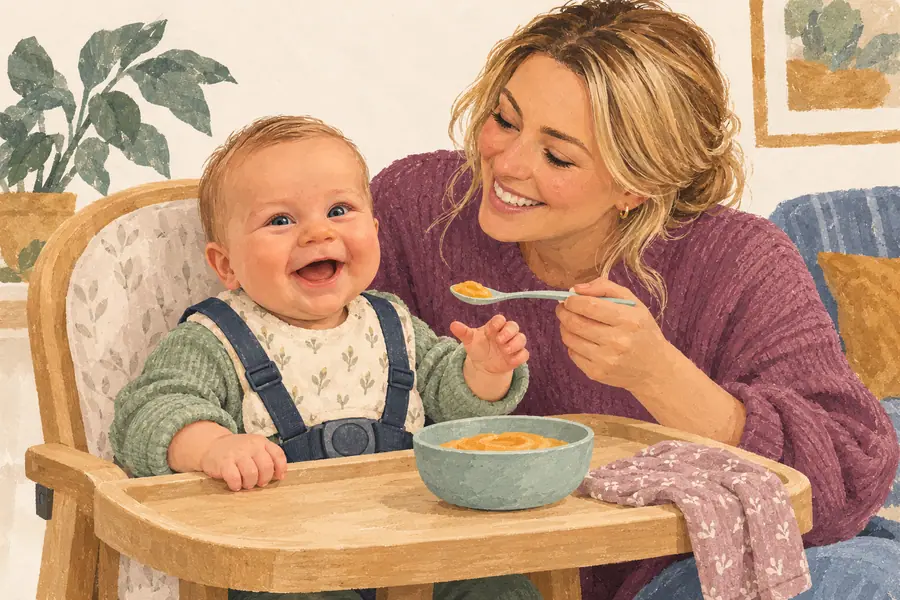
What helps most is a calm, predictable routine. Offer small portions of family food at regular times, eat together, keep offering new foods without pressure, and let your toddler decide how much to eat. Most toddlers who are active, growing and well are getting enough, even when individual meals look tiny.
Why do toddlers become fussy eaters?
A few things come together in the toddler years:
- Slower growth. The AAP's tips for parents of picky eaters note that a toddler's growth rate and appetite naturally slow after infancy. The Better Health Channel says food intake may drop as a result.
- Wariness of new foods. The AAP describes a dislike of unfamiliar foods, called "neophobia", as a common reason for picky eating.
- Busy bodies, small stomachs. Toddlers are busy and often don't want to stop to eat, and their stomachs are small, so smaller meals make sense.
- Learning likes and dislikes. The AAP's toddler feeding guide says toddlers are learning what they do and don't like, and calls picky eating a stage that will pass.
The NHS guide to fussy eaters says it's perfectly normal for toddlers to refuse to eat, or even taste, new foods. If mealtimes are turning into battles of will, toddler tantrums has ideas for the bigger feelings behind them.
Who decides what and how much my toddler eats?
A helpful way to think about it — sometimes called a division of responsibility — is that you and your toddler have different jobs.
| Your job | Your toddler's job |
|---|---|
| Choose which foods are offered | Choose how much to eat |
| Set regular meal and snack times | Decide when they've had enough |
| Make meals calm and shared | Pick what to eat from what's offered |
The AAP's advice on helping a picky eater try more foods suggests regular, structured meal and snack times without distractions, and letting children choose what and how much to eat from what's offered. The Better Health Channel says to let toddlers decide when they've had enough, and notes that children will never voluntarily starve themselves.
This doesn't mean anything goes. You still decide what's on the table. Include at least one food your child usually eats, so there's always something they can fill up on.
How many times should I offer a new food?
Often 10 times or more. The Better Health Channel says 10 times or more; the AAP gives figures of 10 to 15 times over several months, and 15 to 20 tries. The NHS simply says it may take lots of attempts, and suggests going back to foods your child rejected earlier, because tastes change.
Ways to make repeat tries easier:
- Offer a tiny amount. The AAP suggests a spoonful of the new food alongside foods your child already likes.
- Space it out. The AAP suggests waiting a week or two before offering the same new food again.
- Change how it's served. The NHS gives the example of a child who refuses cooked carrot but eats it raw and grated.
- Build bridges. Once a food is accepted, try similar ones by colour, flavour or texture — pumpkin, then sweet potato, then carrot.
- Pair it. Serve an unfamiliar food with a favourite, such as broccoli with grated cheese.
- Let them explore. Many families find that letting a toddler touch or smell a new food, with no expectation to eat it, takes the pressure off.
Many families find it easier to see a new food as a long-term project rather than a test at each meal.
What actually helps at mealtimes?
The NHS, Better Health Channel and AAP agree on a short list:
- Eat together. Children learn by copying, so eat the same food with them when you can, with screens off.
- Serve family food. Give your toddler what the rest of the family is eating, without added salt.
- Keep portions small. The Better Health Channel suggests child-size meals; they can always ask for more.
- Praise eating, not amounts. The NHS suggests praising your child for eating, even if they only eat a little.
- Watch the timing. Don't leave meals until your child is too hungry or tired to eat.
- Limit the meal. The Better Health Channel suggests meals of no more than 20 to 30 minutes.
- Involve them. Let your toddler help choose fruit and vegetables at the shop and help with simple tasks like stirring, sifting or counting ingredients.
- Offer choices. The Better Health Channel suggests letting your child choose from the plate and feed themselves.
Example day — adjust to your toddler
The Better Health Channel suggests about three small meals a day with a snack in between, and the NHS says 2 healthy snacks a day is plenty. This made-up example shows one way to space them.
| Time | What happens |
|---|---|
| 7:00 am | Breakfast with the family |
| 9:30 am | Morning snack and water |
| 12:00 pm | Lunch, including one familiar food |
| 3:00 pm | Afternoon snack and water |
| 5:30 pm | Family dinner; a spoonful of something new |
Keeping a gap between snacks and meals helps your toddler come to the table hungry.
What should I avoid with a fussy eater?
- Forcing or pressuring. The NHS says if your child rejects food, don't force them; take it away without saying anything. The AAP warns that pressure or punishment can make children actively dislike foods. The Royal Children's Hospital Melbourne also warns that forcing young children to eat may cause choking.
- Bribes and food rewards. The NHS says not to use food as a reward. The Better Health Channel says bribing with lollies, biscuits or dessert makes those foods seem better.
- Separate meals. The AAP says cooking a different meal when your child refuses encourages picky eating.
- Too many snacks or drinks. Lots of snacks, milk or juice can fill a small stomach before meals. The Better Health Channel says juice isn't recommended; water and milk are better. Pregnancy, Birth and Baby from the Australian Government suggests no more than 500 mL of cow's milk a day after 12 months. See moving to cow's milk for more.
- Threats, nagging and comparisons. The Better Health Channel says these upset everyone. The NHS suggests that eating with other children can help, as long as you don't compare.
Keep safety in place
Fussiness can tempt you to offer "easy" snack foods, but toddlers are still learning to chew. The Royal Children's Hospital Melbourne in Australia says never to give whole nuts to children under 5. Cook, mash or grate hard fruit and vegetables, and cut grapes in half lengthways and then in half again. Keep your toddler sitting down to eat. The RCH recommends that anyone caring for children does a first-aid course; the choking vs gagging guide covers what to do in an emergency.
Is my toddler eating enough?
The NHS suggests looking at what your child eats over a week rather than a single day. If they're active, gaining weight and seem well, they're likely getting enough. The Better Health Channel also suggests judging intake over the week.
A toddler might eat almost nothing at dinner and a big breakfast the next morning. That's normal variation, not a pattern to fix.
What's worth noting in a food diary?
If you're worried, a week of simple notes can help. Record what was offered, roughly how much was eaten, snacks and milk, and how your child seemed. This often shows more variety than you remember, or reveals that drinks or snacks are filling them up. It's also useful to bring to a GP or child-health nurse.
When should I get help for fussy eating?
Call your local emergency number (000 in Australia, 999 in the UK, 911 in the US) now if your child:
- is choking and can't breathe, cough or cry
- has trouble breathing, a swollen tongue, or becomes pale and floppy after eating (see introducing allergens)
See your GP soon if your child:
- is losing weight, has stopped gaining weight or isn't growing as expected
- eats only a very small number of foods, or is cutting out whole food groups
- seems afraid to eat because of choking, pain or vomiting
- is refusing drinks as well as food, or seems unwell (see dehydration signs)
The signs in the first three points can point to avoidant restrictive food intake disorder (ARFID). KidsHealth describes ARFID as extreme selective eating that can lead to weight loss, poor growth or nutritional deficiencies, and says getting help early is the best way to treat it.
Talk to your GP or child-health nurse if:
- you're still worried after checking that your child seems healthy and energetic, as the Better Health Channel suggests
- mealtimes have become a daily battle and the strategies above aren't helping
- your child relies heavily on milk and eats little else