A conversation does not need a correct answer
UNICEF describes reading with a baby as paying attention and talking about the world together Source 1. The cards here are original examples of what that can sound like. They are invitations to interact, not exercises to measure language or instructions for reaching a milestone.
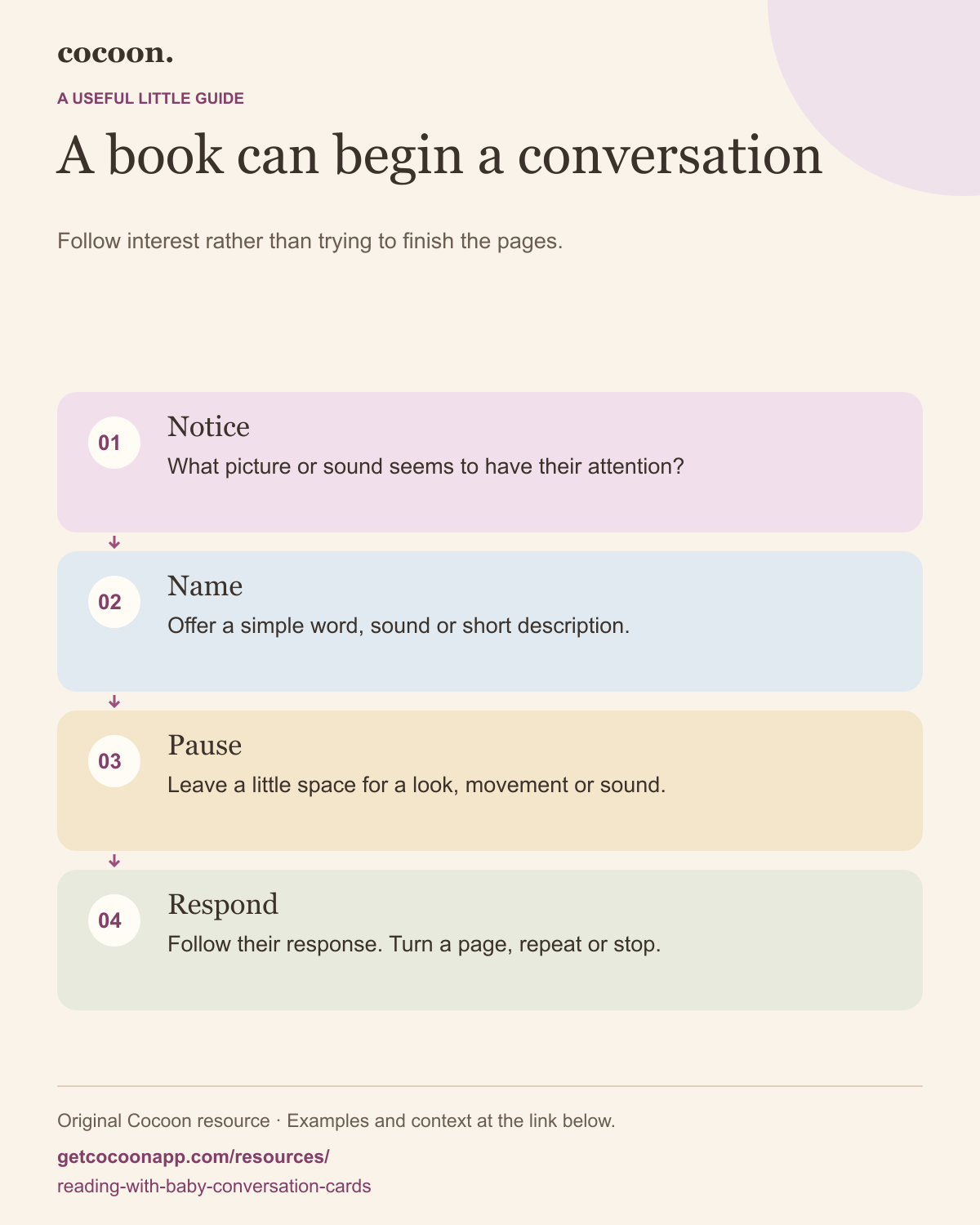
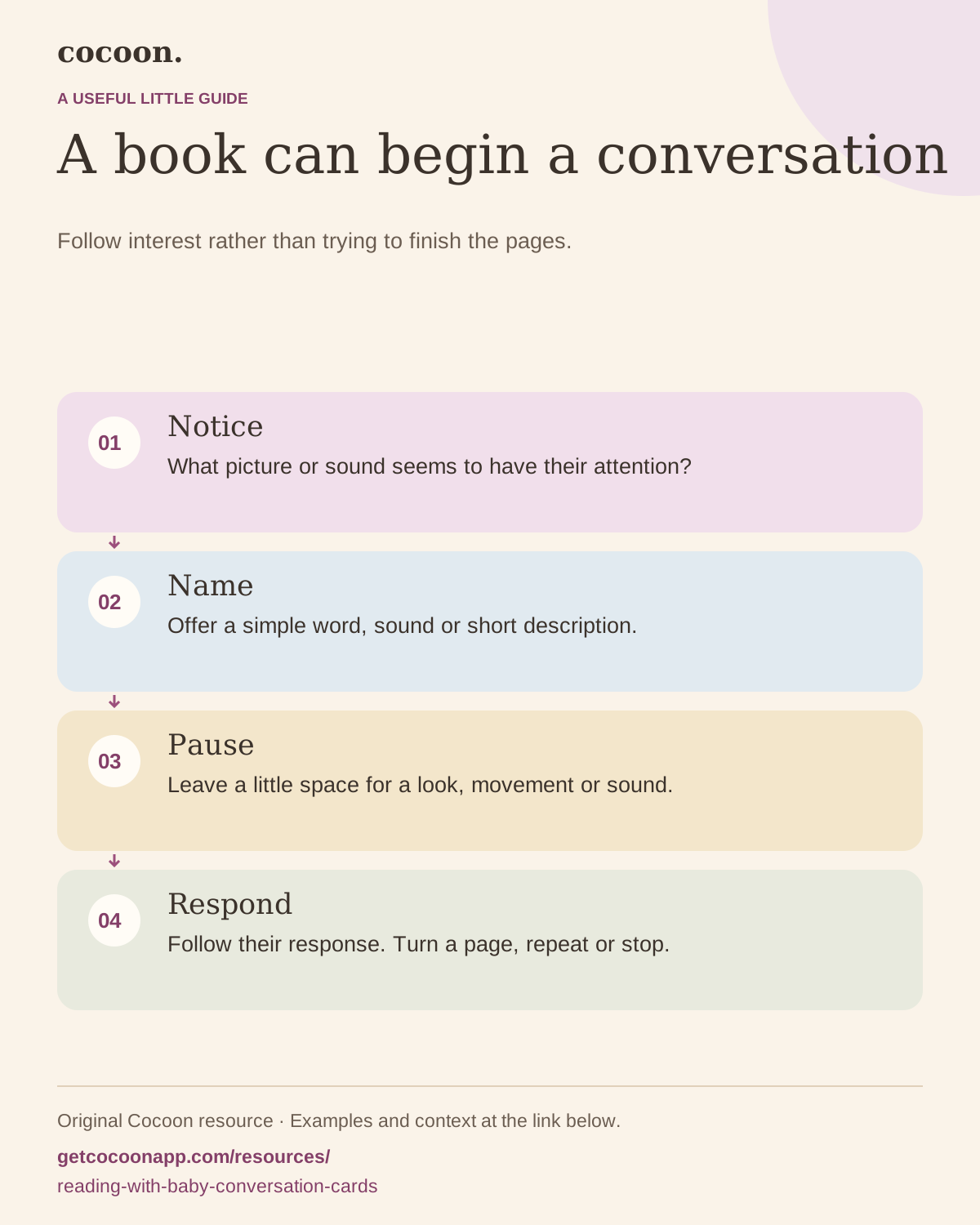
A baby might look, move, make a sound or simply listen. You do not need to quiz them with “What is that?” on every page. A description such as “A little dog, beside the big shoe” can keep the moment open.
Use the language that belongs to your family
Try the words and sounds that come naturally to you. You can tell a story about the picture, sing a familiar line or use a family nickname for an animal. If two caregivers use different words, the journal can preserve both without making one the official version.
The cards have no sequence and no time target. Choose one that suits the book you already have. You do not need a special set of products to use these conversation ideas.
Let repetition be a choice
If your baby keeps looking at one page, you can stay there. Repeat a sound, point out a second detail or say the same short line again. If attention moves elsewhere, close the book or try something else. Finishing it is not the task.
Keep the physical setup comfortable and supervised, and use books appropriate for your child. This page offers conversation prompts, not guidance for independent play or a way to assess development. Raise any developmental concern with your child’s care team.
Save a moment without scoring the activity
A memory might be “You laughed at my terrible duck noise.” It does not need to become “completed ten minutes of reading.” Notice what you enjoyed together and keep that detail if you want to.
For questions about communication and development, explore the first words guide. For a keepsake, try the 30 baby journal prompts. Neither a quiet session nor a busy one needs to become a performance report.