Most babies start teething at around 6 months, though some start earlier or later. A new tooth can bring sore, red gums, extra dribbling, chewing, a flushed cheek and a grizzly baby who sleeps badly for a day or two. Some teeth arrive with no fuss at all. Cold pressure, gentle gum rubbing and comfort are the safest first steps.
Teething can raise your baby's temperature slightly, but not to 38°C or more. A fever, diarrhoea or a baby who seems unwell needs to be treated as possible illness. This guide covers signs, relief, products to skip and when to get help. For the order teeth arrive and brushing by age, see the teething timeline.
When do babies start teething?
The NHS says most babies start teething at around 6 months, and some are born with a tooth. The Sydney Children's Hospitals Network (SCHN) puts the usual start between 3 and 12 months.
The Better Health Channel says the bottom front teeth usually come first, and most children have all 20 baby teeth by about 3 years. That means teething comes and goes over a couple of years, not one stretch.
What are the signs of teething?
The NHS lists these possible signs:
- A sore, red gum where the tooth is coming through.
- A temperature that's slightly raised but under 38°C.
- One flushed cheek, or a rash on the face.
- Rubbing their ear.
- Dribbling more than usual.
- Gnawing and chewing on things.
- Being more fretful than usual, or not sleeping well.
The Better Health Channel says teething symptoms usually last around 48 hours. It also describes an eruption cyst, a bluish-grey bubble on the gum that usually goes once the tooth is through.
Is it teething or illness?
Teething is a common explanation for a grumpy baby, but it doesn't cause high temperatures or make a baby seriously unwell. Use this as a guide:
| What you notice | Teething? | What to do |
|---|---|---|
| Sore gums, dribbling, chewing, grizzly | Likely | Comfort and relief steps below |
| Temperature slightly raised, under 38°C | Can be | Comfort; keep an eye on it |
| Temperature 38°C or more | No | Treat as possible infection |
| Diarrhoea, vomiting or runny nose | Unlikely; sources differ | Watch for dehydration and illness |
| Symptoms lasting more than about 48 hours | Check other causes | See your GP |
| Floppy, hard to wake, breathing trouble | No | Call your local emergency number (000 in Australia, 999 in the UK, 911 in the US) |
The Royal Children's Hospital Melbourne (RCH) says teething may cause a temperature up to 38°C, but anything above that is not caused by teething and your child likely has an infection.
Sources disagree on other symptoms. The NHS says there's no evidence teething causes diarrhoea, and SCHN says teething shouldn't lead to a high fever or diarrhoea. The Better Health Channel lists runny nose and diarrhoea among symptoms linked with teething. It advises seeing your doctor if symptoms last longer than around 48 hours, to check for causes such as an ear infection.
The safest approach is not to put diarrhoea, vomiting or a fever down to teething. See fever in babies for temperature thresholds by age.
What helps a teething baby?
Start with the simplest options:
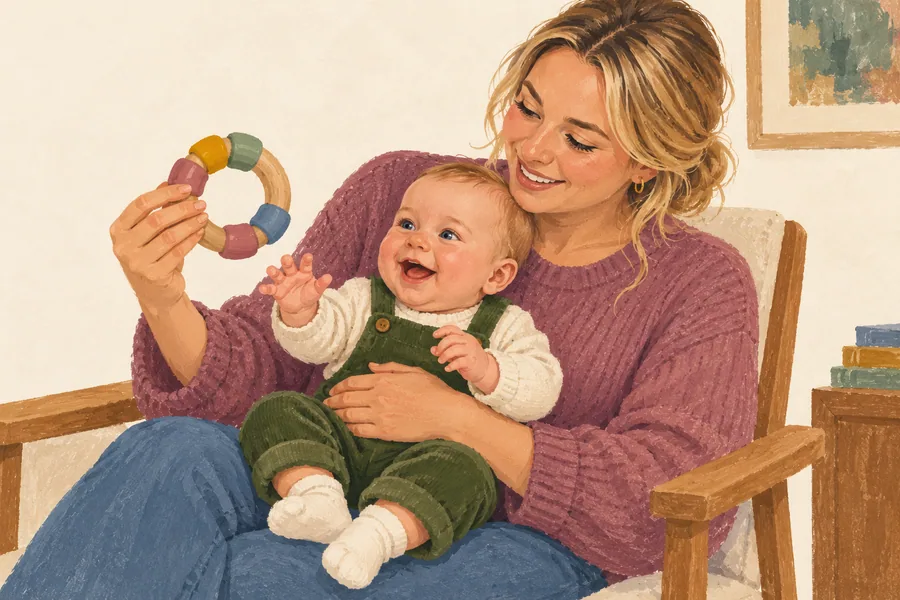
- A firm teething ring, cooled in the fridge. The NHS teething tips say some rings can be cooled in the fridge, but never put one in the freezer because a frozen ring can damage gums. The US FDA recommends a firm teether that isn't liquid-filled.
- Gentle gum rubbing. Rub the sore gum with a clean finger, or a soft, wet cloth, as the NHS and Better Health Channel suggest. SCHN also suggests a chilled, wet washcloth to chew on.
- Comfort and distraction. The NHS says cuddles and play can take your baby's mind off sore gums.
- Wipe away dribble. Gently wiping your baby's face may help prevent a dribble rash, according to the NHS.
- Stay close. The FDA advises supervising babies with teethers to prevent choking.
A few practical points help:
- Check the care instructions before cleaning a teething ring. The Better Health Channel says not to sterilise plastic rings in boiling water or the dishwasher unless the manufacturer says so.
- Avoid sweet teething foods. The NHS says nearly all rusks contain some sugar, which can harm new teeth.
- Expect some extra night waking for a few days. Our night wakings guide has settling ideas that keep safe-sleep rules in place.
Can I give my baby pain relief for teething?
If your baby is clearly in pain, a pharmacist or GP can advise whether paracetamol or ibuprofen suits them. The NHS says to use sugar-free products, and gives these age limits:
- Paracetamol can be given from 2 months.
- Ibuprofen can be given from 3 months. It isn't for babies younger than that.
- Children under 16 should not have aspirin.
Always use the dose on the product label for your baby's age and weight, or ask your pharmacist. Write down each dose and the time, especially if more than one carer is giving medicine. If your baby needs pain relief for more than a day or two, check for another cause with your GP.
Which teething products should I avoid?
| Product | Why to avoid | Source |
|---|---|---|
| Amber necklaces and teething jewellery | Deaths and serious injuries from strangulation and choking | FDA, Better Health, SCHN |
| Teething gels | Little evidence they work; ingredients can harm babies | NHS, Better Health, SCHN, FDA |
| Homeopathic teething products | Not recommended | NHS, FDA |
| Honey or alcohol on gums or dummies | Unsafe for babies | SCHN |
| Frozen teething rings | Can damage gums | NHS, FDA |
Teething gels. The Better Health Channel says common Australian teething gels contain choline salicylate, which is related to aspirin. It also says gels with numbing agents are hard to measure, so a toxic dose is possible, and research suggests gels may not relieve teething pain. SCHN advises against teething gels or tablets unless your doctor recommends them. The FDA says benzocaine and lidocaine products shouldn't be used for teething pain, and the NHS says general mouth-pain gels aren't suitable for children.
Amber necklaces. The FDA reports deaths and serious injuries from teething jewellery such as amber necklaces. The Better Health Channel notes the Australian consumer regulator has warned of choking and strangulation hazards. Never tie anything around your baby's neck.
When should I get help for a teething baby?
These tiers match our when to call the doctor guide.
Call your local emergency number (000 in Australia, 999 in the UK, 911 in the US) now if your baby:
- Is floppy, very sleepy or hard to wake.
- Is struggling to breathe, or has blue, grey or blotchy skin, lips or tongue.
- Has a rash that doesn't fade when you press a glass on it.
- Has a seizure.
- Has had no wet nappy for 12 hours.
- Is under 3 months and has a temperature of 38°C or more.
- Is 3 to 6 months old and has a temperature of 39°C or more.
These come from the NHS urgent-help guide.
Get medical help today if your baby:
- Is not feeding, or is feeding much less than usual.
- Is under 6 months and has any sign of dehydration, such as fewer wet nappies or a dry mouth, as the RCH dehydration fact sheet advises.
Talk to your GP, child-health nurse or dentist if:
- Teething symptoms last more than about 48 hours.
- You're unsure whether a lump on the gum is a tooth or something else.
- You have questions about when teeth should arrive (see the teething timeline).
What is worth noting during a teething spell?
Note the date you first see a tooth, any temperature readings with times, doses of medicine, and how feeds and sleep change. If symptoms keep going past a couple of days, or a fever appears, that record helps your GP look for another cause.