Babies can't cool themselves as well as adults, so on hot days they rely on you to keep them in the shade, lightly dressed and well fed. Offer extra breastfeeds or formula, keep babies under 6 months out of direct sun, and keep the usual safe-sleep basics with fewer layers. Never cover a pram with a blanket or cloth and never leave your baby in a car. Advice on giving water to babies under 6 months differs between countries, so check the section below. Know the signs of heat illness, because a baby who is floppy, hard to wake or struggling to breathe needs emergency help.
Why are babies more at risk in hot weather?
Pregnancy, Birth and Baby, the Australian Government's parenting service, says babies and young children don't sweat as much as adults and can't regulate their body temperature as well, which makes it hard for them to cool down. The AAP's extreme heat advice adds that young children often can't recognise when they're getting dehydrated.
Overheating also matters for sleep. Pregnancy, Birth and Baby notes research linking overheating and sudden infant death syndrome (SIDS), so hot nights need a little extra thought (see below).
How do I keep my baby cool at home?
- Dress lightly. One light, loose layer of natural fabric such as cotton is usually enough. In really hot weather, the Lullaby Trust says a short-sleeved vest or just a nappy is fine.
- Keep the house cool. Close curtains or blinds during the day and open windows when it's cooler outside, if it's safe. The AAP says lower floors tend to be cooler, and if you don't have air conditioning, to find a nearby cool building such as a library or shopping centre.
- Use fans carefully. A fan helps move air around the room, but the Lullaby Trust and the NHS say not to aim it directly at your baby.
- Reduce skin contact during feeds. Pregnancy, Birth and Baby suggests placing a towel or sheet between you and your baby while feeding, because skin contact generates heat.
- Check your baby's temperature by touch. The Lullaby Trust says to feel the chest or the back of the neck, and Red Nose in Australia says to feel the tummy, which should feel warm. Hands and feet usually feel cooler, which is normal.
Should I feed my baby more often in hot weather?
Yes. Red Nose in Australia says babies need to drink more often in hot weather. Breastfed babies may want to feed more often, sometimes for shorter feeds, and formula-fed babies may need extra bottles. If you're breastfeeding, Pregnancy, Birth and Baby says to drink plenty of water yourself too.
Water for babies by age and country
| Age | Australia (Pregnancy, Birth and Baby) | UK (NHS) | US (AAP) |
|---|---|---|---|
| Under 6 months | Breastfeeds or formula only, no water | Breastfed: no water. Formula-fed: a little cooled boiled water between feeds | No water; extra breast milk or formula |
| From 6 months | Small amounts of cooled boiled water after or between feeds | Sips of water from a cup with meals, extra if hot | Offer water as well as milk |
The NHS sun safety page says fully breastfed babies under 6 months don't need water until they start solids, but formula-fed babies can have a little cooled boiled water between their usual feeds. Australian and US advice is stricter for this age group. Whatever your country, water should never replace milk feeds. Our water for babies guide covers this in more detail.
Watch for signs your baby isn't getting enough, such as fewer wet nappies, dark wee or a dry mouth. See dehydration signs.
How should my baby sleep when it's hot?
The safe-sleep basics don't change in the heat: on the back, head and face uncovered, own cot or bassinet, nothing soft or loose in the sleep space.
- Room temperature: the Lullaby Trust suggests a room of 16–20°C and a room thermometer, while Red Nose says there's no single "right" room temperature and to dress your baby for the room.
- Clothing: a short-sleeved bodysuit or just a nappy in very hot weather, or a low-tog sleeping bag in light, natural fabric if the room is cooler.
- Air flow: Pregnancy, Birth and Baby suggests cotton sheets, removing padding around the cot so air can circulate, and moving the cot to a cooler, well-ventilated room if needed.
- Cooling: use air conditioning or a fan that doesn't blow directly on your baby. Red Nose says cooling doesn't need to run all night.
- No sleeping in prams: Pregnancy, Birth and Baby says never to leave your baby to sleep in a pram.
Pregnancy, Birth and Baby also notes that sleep patterns may change in hot weather, with babies sleepier in the hottest part of the day and more lively when it cools down. For outfits by room temperature, see dressing your baby for sleep.
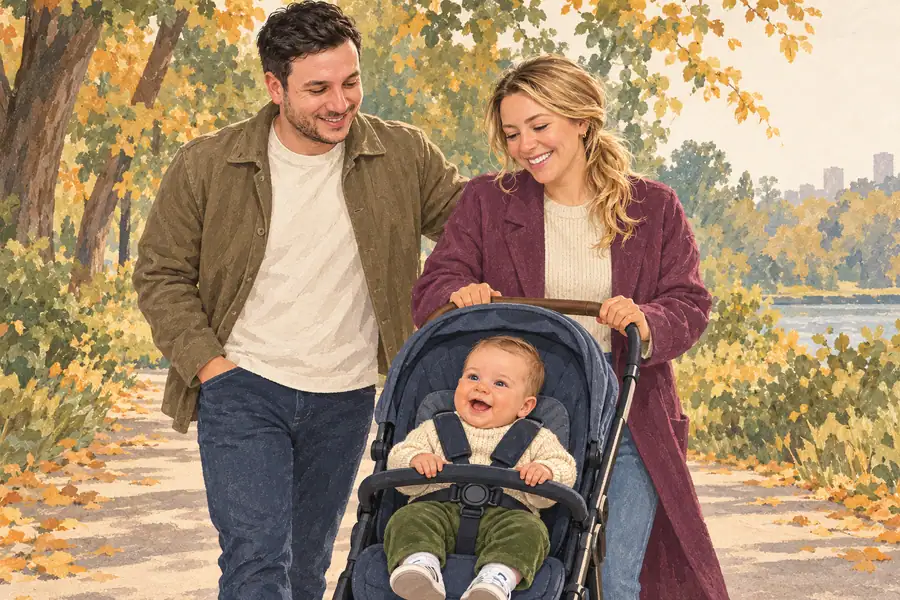
Is it safe to cover a pram in hot weather?
No. Don't drape a blanket, muslin, wrap or cloth over a pram, stroller or capsule, even a thin one.
- Red Nose says never to cover the pram, because even light fabric can block airflow and hold heat around your baby.
- The Lullaby Trust says not to cover prams, buggies and travel systems with blankets, cloths or any cover that stops air flowing, and to use a clip-on sunshade or parasol instead.
- The NHS says covering a pram with a blanket could lead to overheating.
- Pregnancy, Birth and Baby's heat illness page lists a dry cloth draped over a stroller or capsule as one way babies develop heat-related illness.
Use a sunshade designed for your pram, walk in the shade, keep outings short on very hot days, and check on your baby regularly.
How do I keep my baby safe in the car in hot weather?
Pregnancy, Birth and Baby, Red Nose and the AAP all warn that a car can become dangerously hot in a short time; the AAP says this happens even with the windows open. Red Nose says cars heat up quickly even with the air-conditioning on, and that the padding in car restraints can add heat. On hot days:
- Cool the car before putting your baby in, and use window shades.
- Take breaks on longer trips to take your baby out of the seat and offer a feed or drink, as Red Nose suggests.
- Take your baby out of the seat when you arrive. See car seat safety.
How do I protect my baby from the sun?
Sun protection advice by age:
| Age | NHS (UK) | AAP (US) |
|---|---|---|
| Under 6 months | Out of direct sunlight; sunscreen not recommended | Out of direct sunlight; sunscreen on small areas like the face only if no shade or clothing |
| 6 months and over | SPF 30+ with UVA and UVB protection, reapplied every 2 hours | Broad-spectrum SPF 15 to 50, reapplied every 2 hours |
| Hottest hours | Avoid 11am to 3pm | Limit 10am to 4pm |
The NHS also recommends a sunhat with a wide brim or a long flap at the back, loose clothing, and a parasol or sunshade on the pram. The AAP's sun safety guide suggests a hat with a brim all the way round to shade the face, ears and back of the neck. In Australia, Pregnancy, Birth and Baby says to put sunscreen on your baby if they are older than 6 months, and to avoid sun exposure on very hot days.
When to get help: signs of heat illness
Heat illness ranges from mild heat stress to heatstroke, which Pregnancy, Birth and Baby describes as a rare, life-threatening emergency.
| What you notice | What to do |
|---|---|
| Hot, sweaty or flushed, but alert and feeding | Move somewhere cooler, remove layers, offer a feed |
| Weak or tired, thirsty, pale and sweaty, or a fever of 38.3°C to 40°C | Cool them and see a doctor today; seek urgent care if not improving |
| Vomiting, with a temperature of 38°C (100.4°F) or more, after time in the heat | Go to the emergency department or call your local emergency number (000 in Australia, 999 in the UK, 911 in the US) |
| Struggling or breathing very fast, floppy, listless or hard to wake | Call your local emergency number (000 in Australia, 999 in the UK, 911 in the US) now |
| Seizure, hot dry skin, or pale or blotchy skin with cold hands and feet | Call your local emergency number (000 in Australia, 999 in the UK, 911 in the US) now |
| No wet nappy in 12 hours, or a sunken soft spot | Call your local emergency number (000 in Australia, 999 in the UK, 911 in the US) now |
| Under 3 months with a temperature of 38°C (100.4°F) or higher, or 3 to 6 months with 39°C (102.2°F) or higher | Call your local emergency number (000 in Australia, 999 in the UK, 911 in the US) or go to the emergency department |
These signs come from Pregnancy, Birth and Baby, the RCH sun safety fact sheet (which treats a temperature of 38°C or more with headache, nausea or vomiting as heatstroke needing the emergency department) and the NHS list of when to get urgent help. The NHS heatstroke page adds that someone who is still unwell after 30 minutes of cooling and fluids needs emergency help.
While you wait for an ambulance, Pregnancy, Birth and Baby suggests cooling your baby in a lukewarm bath or sponging them, keeping their skin moist, fanning them, and giving fluids only if they are awake and able to swallow.
For milder heat exhaustion, take your baby somewhere cool, remove extra clothing, spray or sponge them with lukewarm water and offer feeds, and watch them closely. Pregnancy, Birth and Baby says to take your baby to the doctor if you suspect heat exhaustion or they seem unwell, and not to wait. For fever, see fever in babies.